Showing posts with label Bane. Show all posts

Sunday, 15 March 2015

Stat Blocks - Creatures of the Dread Ring, Part Two

I prepared quite a few stat blocks for the Dread Ring in the Neverwinter Wood. in large part because there is a much larger dungeon to explore - the Dread Ring itself - than what my players in Neverwinter: Year of the Ageless One are likely to end up exploring.

For those who have access to Return to the Tomb of Horrors, my version of the Dread Ring includes the dungeon of the Black (aka Bleak) Academy including the triple entrances to the infamous Tomb of Horrors. Sadly, my PCs won't be going there as my players are very cautious and dungeon-averse except where it meets the needs of the plot. But delving for delving's sake? That isn't what they do. Cowards.... ;)

Sword Fodder

The original custom undead for the Red Wizards of Thay was the dread warrior which first appeared in 2E's Dreams of the Red Wizards (IIRC, otherwise it was the Spellbound boxed set). They have survived all the way to 4E but now exist in multiple forms: the dread archer, dread guardian, dread marauder, and dread protector. Although they are level-appropriate and well-designed (they're from Monster Manual 3), I decided to go with some custom monsters for the Dread Ring although they are likely to make an appearance later. I mention them only for the sake of completeness in case someone reading this is looking for some undead with Thayan flavour.

In my former post (Part One) with creatures of the Dread Ring, I included the bone weird as a way of showing the effects of the Dread Ring in terms of creature unusual undead. The Dread Ring zombie comes from that same way of thinking and is also a lurker.

It is based on Strahd's dread zombie from Open Grave - insofar as its ability to "respawn" - but with a lurker twist. In this case, it has the ability to slam someone into the earth of the Dread Ring and then trigger the ability of the Dread Ring to swallow that creature.

I see these zombies as looking like corpses that have been freshly disinterred with clumps of dirt and even crawling worms filling the gaps where the flesh has rotten away. Also, the nature of their method of movement and "respawning" justifies them popping up pretty much anywhere in the Dread Ring.

Thay has always used gnolls as a common slave race and as expendable sword fodder. As a result, I like to include gnolls with any Red Wizard encounters. In this case I went with gnoll archers because they struck me as very appropriate guards for the Dread Ring in this wilderness location. They could also be used to supplement the food supplies of the living Thayans.

But that's just background.

In other posts, I have mentioned that my basic guideline for monster levels is their hit dice in 1E or 2E. Gnolls have 2 hit dice in those earlier editions so that would translate to a level 2 artillery. A standard level 2 monster has the same XP value as a level 10 minion and I definitely wanted these gnolls to be minions so that's why they're level 10 artillery.

The stat block is very simple with no conditions to track. I decided to avoid a normal melee basic attack based on a melee weapon and do something I have done with orcs before and allow these gnolls to make melee attacks with their ranged weapon. Yes, clearly I have watched the Lord of the Rings movies. Point blank shot also has a push effect so that will hopefully allow the gnoll archer to get out of melee range.

Including the Thayan knight in my roster of monsters for the Dread Ring was definitely going to happen for two reasons:
1. I have four Thayan knight miniatures which I have been wanting to use for a while.
2. I really like the Wayne Reynolds art showing a Thayan knight defending a Red Wizard and have used it before to show players whom they were fighting.

I'm actually really happy with how the stat block turned out. It feels a lot like an assault swordmage in the way it plays but it remains really easy to use while being tactically interesting. I suspect I will also be using higher level versions of this stat block in the future as I really like the way it works.

Thayan Banites

One of the changes inflicted on FR courtesy of the events surrounding the Spellplague was that Szass Tam made a deal with Bane and promised him that the Black Lord's religion would be the only one permitted in Thay. (That's the short version.) As such, it makes sense that a Thayan fortress such as the Dread Ring would also include some Thayan Banites.

The dark acolyte of Bane is a minion controller that exists as a speed bump - and hold person can definitely be a speed bump. Also, as much as possible, I try to include ways that the minions I design can survive a hit: in this case the dark acolyte can possibly avoid a melee attack by using cause fear to push the attack away.

The masters of the dark acolytes are the dark hands of Bane, another nasty controller. Their signature/at-will power Bow Before the Black Lord! is really all that they need to mess up the PCs' mobility as it even slows on a miss and, on a hit, prone plus unable to stand can, in the right position, be as effective as a stun.

As you would expect from clerics of the deity of tyranny, they can also dominate but that is once an encounter but it is reliable so, if it misses, it can be used again.

They're quite effective in melee as well, thanks to their aura 3 which gives them and their allies combat advantage against their enemies.

In short, they're nasty.

The final Thayan Banite is the hateful zealot of Bane which is essentially a pursuing avenger in monster form. The reason for the use of the word hateful is because, in 3.xE, one of Bane's granted domains was hatred and all the Banite clerics I ever statted up as NPCs in 3.5E had hatred and tyranny as their two domains.

Anyway, the hateful zealot feels a bit like Darth Maul in the way it plays. Oath of enmity is, of course, the signature avenger ability that ensures that the hateful zealot is very likely to hit while Feel the Hate! makes sure its oath of enmity target is not going to get very far before the hateful zealot catches up with it. And, of course, once it has caught up with its target, bond of pursuit should see it stay in melee or charging range.

I also really like this stat block and expect it to provide a model for any other avengers "monsters" I might build in the future. 

Red Wizards of Thay

Before 4E changed everything, Red Wizards of Thay were organised around the eight schools of magic. Post-4E - more accurately, post the novels by Richard Lee Byers where he, inter alia, introduced Dread Ring and blew up Thay - the Red Wizards largely focussed on necromancy.  5E Thay seems to be heading back to the older version of Thay but who really knows as WotC doesn't seem to want to publish a new FR campaign setting, but I digress....

The apprentice necromancer, like the dark acolyte minion above, is a nasty speed bump. Its primary attack - rotting doom - stops the target from receiving healing. That's tactically interesting too because not being able to heal is not that serious in the first couple of rounds of combat but becomes potentially very nasty later. Do the PCs deal with these minions first to ensure that they have access to healing later or do they take the fight to the primary threats? Hmmm, decisions, decisions....

... and it's a decision made more complicated because the Thayan necromancer that poses the greater threat is also capable of applying that same condition with its ranged basic attack.

But before it does that, grasp of the grave allows it to lay down an ally-friendly zone that lasts until the end of the encounter. Basically, this power is supposed to model a zone of grasping hands and claws of various corpses trying to drag the necromancer's enemies beneath the earth. Hmmm, maybe I should have made it difficult terrain for enemies as well....

My plan is always to pair the necromancer with at least one Thayan knight and anyone closing on the necromancer could end up attacking the Thayan knight in melee instead of the necromancer because of the knight's aegis of the Thayan knight. Hopefully that will give the necromancer some staying power plus its defensive staff melee basic attack can allow it to move away from a melee attacker without provoking opportunity attacks.

And they're the basic generic Thayan forces at the Dread Ring. There are named NPCs such as Valindra Shadowmantle inside the skull-shaped fortress at the centre of the Dread Ring but it's highly unlikely my PCs are going to encounter them. If they do, I will post the stat blocks here.

Tuesday, 16 September 2014

Starter Set Sandbox 12 - Phandalin & Wave Echo Cave (Updated 26Feb2017)

Realmslore

Until Lost Mine of Phandelver was published, all we basically has by way of information about Phandalin and Wave Echo Cave was this:
Phandalin was an important farming center located northeast of Leilon, where the Triboar Cutoff East fades into a trail. The road was abandoned after years of orc attacks obliterated every caravan that passed down the road, conquering Phandalin in the process. When the orcs were driven out, the village was left largely in ruins, and it remains so today.

Under the leadership of a chieftain called Uruth, the orcs expanded steadily, building a realm called Uruth Ukrypt (Home of Uruth). Its name echoes today in Kryptgarden Forest. Too lazy to support themselves by farming, the orcs devastated the game in their realm and subsequently took to raiding human holdings for food. Some 400 years have passed since then, during which time concerted human attacks decimated the orc kingdom and nearly drove the creatures from the area entirely.

No one lives here now but monsters, though passing hunters and rangers often camp in one of the more secure buildings. It still has three usable deep wells, one of which is considered to be heavily tainted with an undetectable poison that kills the imbiber three days after ingestion. Orcs and half-orcs are supposedly immune to the toxin.

The orc attacks forced gnomes and dwarves to abandon a mountain delve near Phandalin where they mined mithral in a union they called the Phandelver's Pact. This lost lode was called Wavecho Cave because the roll of waves beating on the shore could be heard in the natural cavern. Shortly before the
mine was abandoned, a lode of platinum was discovered. The size is unknown, but a very old dwarf who worked the mine remembers that the vein "held great promise".

Phandalin is the best preserved of the many ruined keeps and villages scattered along the Sword Coast, most of which are little more than heaped stones, graves, and cellars hidden by reed grasses and creeping vines. Many of these areas shelter predatory beasts or passing adventurers.
And that's pretty much it. (I am quoting from The North boxed set.)

Adapting Other Adventures
 

Red Hand of Doom
 

If you've been reading my other posts and my rough ideas for the Cragmaw tribe to be orcs seeking to rebuilt their lost realm of Uruth Ukrypt, you can imagine that a place like Phandalin, once reduced to a monster-filled ruin by the orcs of Uruth Ukrypt, would seem to the orcs as a logical target for the modern day depredations.

One of the few genuinely good adventures published by WotC in the 3.xE era was, of course, Red Hand of Doom. (And, unfortunately, its success led to WotC thinking that Tiamat was the "go to" BBEG for the next two editions with the execrable pseudo-adventure path Scales of War for 4E and now the Tyranny of Dragons RSE for 5E.)

And while the hobgoblins of Red Hand are very different in play to an orc horde, I think the structure of that adventure can help inform a mini-campaign based on a rising orc threat with Phandalin one of the targets on the way to, say, laying siege to Neverwinter.

I will be starting another Neverwinter-based campaign shortly and I expect the orcs to play an even bigger role in that campaign and Red Hand of Doom is definitely going to inform some of the design choices I make.

Of course, some Lost Mine of Phandelver DMs are probably looking at my idea to turn the Cragmaw tribe into orcs rather than goblins as something they don't want to do. In that case, Red Hand of Doom might be much more useable "as is" other than stat block conversions.

With a bit of work it might also be possible to tie it into the Tyranny of the Dragon storyline if that's something that interests you.

Anyway, I'll stick with the orcs and maybe have a balor general driving the horde forwards....

Keep on the Borderlands
 

One of the really interesting things about B2 Keep on the Borderlands, and particularly the Caves of Chaos, is that it makes nearly no sense. Why are all these evil humanoids, many of whom are fundamentally opposed to each other, dwelling in close proximity without some sort of civil war taking place?

For me, that's not just a rhetorical question. I want to know what is uniting them and keeping them at relative peace with one another.

But before I post some ideas about the answer, let me throw out a suggestion: What if Phandalin replaced the titular keep? And related to that is this: What if Phandalin became the party's home base to scout out rumours of evil humanoids in the Sword Mountains which ultimately lead to the Caves of Chaos from Keep on the Borderlands?

So, what is uniting the evil humanoids? In the final section of the Caves of Chaos - marked with the letter K on the original map - there is a series of chambers that includes THE TEMPLE OF EVIL CHAOS (room number 58). I think whatever unites these disparate evil humanoids is the power represented in this temple.

And here are some FR-appropriate options:

Bane: The Black Lord is the deity of tyranny. Since the Spellplague, he's also been the official deity of Thay because of a deal struck between him and Szass Tam. Maybe this is a Thayan temple to Bane where they perform various arcane and necromantic experiments while also moulding these evil humanoids into an army of conquest. (This probably makes the most sense and also fits in well with the presence of Thayans in the Neverwinter region.)

Cyric: The Prince of Lies is a creature of chaos, murder, and strife. He is also the patron deity of most of the Zhentarim (this is in the 4E era rather than the 5E era where the Zhentarim are now almost player-friendly!). I do like the idea of Zhentarim recruiters training disparate humanoids to perform raids on various caravans and settlements only for the Zhentarim to then turn up and offer protection money to drive the humanoids away.

Garagos: The Reaver the chaotic evil version of Tempus, and possibly Tempus's predecessor as the deity of war. And Garagos is not happy about being supplanted. What if he and his bloodreavers (his clerics) decided to mount a campaign to increase his influence once more? Gathering war-like humanoids could be part of that. I also note that Menzoberranzan: City of Intrigue referred to the tanarukka (tanar'ri-blooded orcs) of the Scourged Legion and that their leader was now a bloodreaver of Garagos. That's another option beyond the ideas I have previously posted about the Cragmaw orcs being directed by clerics of Luthic.
The Scourged Legion


Ghaunadaur: I admit, I like drow. I like really evil drow. I like the traditional Gygax-created pre-Drizzt drow. And as much as I like spider-flavoured drow, I also like the insane servitors of Ghaunadaur. (On that note, one of the best combats I ever ran in 3.5E involved a drider cleric of Ghaunadaur. It took five hours to run 15 rounds and, at the end, we all thought it had only been an hour-and-a-half. It was brilliant.) What about an outcast drider cleric of Ghaunadaur with his (or her) fellow drow heretics gradually building their strength to raid a drow outpost somewhere beneath the Sword Mountains?

Lolth: Ahhh, drow again. Some of you may be familiar with the idea of the Demon Weave (just click on the link for more information otherwise) so maybe these humanoids are being used by the Lolthite drow to gather various items and sacrifices as part of the preparation for the creation of the Demon Weave. It also ties in with the drow BBEG at the end of Lost Mine.

Shar: Shar used to be my favourite evil deity but the whole return of Netherese city of Shade and its Shadovar caused me to lost interest in her. However, it would make sense for a band of Netherese as part of an experiment to determine if these various humanoid tribes can be turned into effective troops.

Tiamat: Again I admit I don't like Tiamat but, if you want to use her, look at Red Hand of Doom for inspiration and make this one of her temples. Frankly, this could potentially tie in really well with the Hoard of the Dragon Queen and the whole Tyranny of the Dragons story. Unfortunately, it's not something I can get excited about....

Summing Up
 

Let's face it, for all of its faults, Keep on the Borderlands is a great starter adventure. Maybe you could use it as part of a Lost Mine of Phandelver-inspired campaign with multiple delves in between completing chapters of the adventure proper?

I must admit, I already have an introductory adventure planned for my next Neverwinter campaign but I am sorely tempted to move the action to Phandalin and kick off the campaign with an updated version of the Caves of Chaos....

Oh, and I have nothing to offer regarding Wave Echo Cave so I simply made it part of this post. Sorry.

26Feb17: About Wave Echo Cave...

When I first did this post, I must confess I didn't actually bother to read the Wave Echo Cave section of Lost Mine of Phandelver. Actually, I may have but clearly I paid no attention to it. That was a mistake because it clearly has potential for expansion and adaptation consistent with some of the other ideas I've posted in this series.

So, thanks, to +Ibskib and +Ben Green for prompting me to take a proper look at it.


The Forge of Spells


The key feature of this location is, of course, the Forge of Spells. While it is implied that it was once a rather potent feature, it has been emasculated to be more suitable for a level 1-5 adventure. I run 4E and use the 4E version of the Forgotten Realms in my games so let me throw around a few ideas from that perspective.

One thing I have failed to do in my 4E games, as my players keep avoiding rituals, is to include magical locations which could conceivably replace the component cost of using certain ritual magic. (3.xE's Midnight Campaign Setting has these sorts of locations and WotC experimented with a similar idea of planar touchstones - go to a place, get a special power - during the course of 3.5E and particularly in the Planar Handbook.)

If I was going to use the Forge of Spells I would have it be, for the purpose of the Enchant Magic Item ritual, the equivalent of the gp value of a level 5 item each day (arbitrary number) but its entire power could be exhausted to produce a level 10 item (another arbitrary number), even for an item crafter of a lower level. That gives the players to choose between a renewing resource or a single major item (and maybe it needs to be level 15 or higher to make it really tempting.) I'm not sure what the equivalent is with respect to magic item creation in 5E but perhaps a 5E fan can comment on that below.

Beyond its usefulness in item crafting, what if it is the remains of an older, purer form of magic?

During the 3E era, Dragon published an article about the computer game Neverwinter Nights and the writer created his take on the reptilian creator race (this has subsequently been replaced by the sarrukh introduced in 3.5E's Serpent Kingdoms). That article postulated that there was a type of magic that predated the Weave which I think it referred to as "old magic" (or "whole" magic) and that the creator races had access to this "old magic" which combined the Weave, the Shadow Weave, and some unknown power. What if the Forge of Spells is, similarly, a legacy of this "old magic"?


Also, <this post> about the Old Owl Well mentions the spell-storing gemstones known as chardalyns. What if the presence of the Forge of Spells has the side effect of seeding chardalyns through the Lost Mine and, indeed, the "stars" - the glittering minerals - in the ceiling of 13. Starry Cavern. What if the presence of the Forge of Spells has the side effect of seeding chardalyns through the Lost Mine and, indeed, the "stars" - the glittering minerals - in the ceiling of 13. Starry Cavern are actually chardalyns that the PCs can recover.

Antagonists

Obviously, Wave Echo Cave is completely useful as is but, if you think about expanding the importance of the Forge of Spells, you may also want to think about how that could change the inhabitants of the 'Cave.

Aboleth

As mentioned by +Ben Green in the comments below, the presence of a dark lake linked to the Underdark (area 16) immediately suggests that an aboleth is present.

So, what would an aboleth want with the Forge of Spells?

SPOILERS FOR NIGHT BELOW. A rough synopsis of the classic 2E boxed set adventure Night Below goes like this: Aboleth-controlled orcs are raiding the countryside and capturing spellcasters. Those spellcasters are being sent into the Underdark where they become the raw material (I forget how - I will need to read it again) for the creation of mind-controlling obelisks which the aboleth will raise around the region to bring the region under the thrall of the aboleth in their city below.

Oh yeah.

Imagine that. With a few changes to LMoP, including making orcs more important and having them capturing spellcasters, you're now looking into a much larger and longer campaign that ends up in the Underdark.

So what purpose does the Forge of Spells serve? In such a scenario, the enslaved spellcasters are brought to Wave Echo Cave and rituals are performed using the Forge of Spells in order to create the mind-controlling obelisks. And once the threat is ended in Wave Echo Cave, the PCs are tasked with exploring the dark lake and travelling further underground to seek out and destroy the real threats.

And you get to run Night Below. Ask Matt Colville; that's a good thing!

Beholders

I admit, I have beholders on the brain. My favourite bad guys in FR are the Zhentarim and the Zhentarim are not the same without beholders behind the scenes. I think I have already mentioned a few times in this series how I used the Zhentarim when I ran my own version of this adventure.

But the main reason the Forge of Spells makes me think of beholders is because the beholder section of 3.5E's excellent Lords of Madness suggests that beholders derive nourishment by exposing magic items to their central eye's anti-magic gaze. I can only imagine how satisfying something like the Forge of Spells might be by comparison!

So, if your version of LMoP Expanded has the Zhentarim playing a key role, perhaps their beholder masters have them searching for this location because it would increase the potency of the beholder hive to the point where they could produce more beholders.

Drow

In the 4E era, WotC made a half-assed attempt with the Rise of the Underdark metaplot/megaplot to tell a big story about how Lolth was going to create her own version of the Weave called the Demon Weave. (I actually like the idea but its execution was, unsurprisingly, botched.) If you look for the Demon Weave tag on this blog, you will be able to find out more about the whole scheme or you can read a short version in the excellent Menzoberranzan: City of Intrigue.

If you go this route, the subsequent investigations of the drow plot could lead the PCs into a slightly different version of Out of the Abyss allowing the campaign to continue to level 20 or so with only a few changes to the story.

That's Enough For Now...

This has been very much a first draft based on a 15-minute reading of part of a product I haven't looked at for 2+ years. But even with no real research, it's plain that this can easily be expanded into a much larger campaign and even segue into either Night Below or Out of the Abyss. Of course, committing to such a choice also means making a few changes to LMoP to help tie everything together but, if you've run LMoP before, you're probably ready for a few small changes to keep things fresh and interesting for you as the DM.

Sunday, 16 February 2014

My FR Metaplots 0 - An Introduction

In the back of my mind, but not yet fully committed to writing, are a few metaplots for my version of the Forgotten Realms which seem to inform nearly every idea I have. These are:

1. The return of a younger Manshoon as head of the Zhentarim and his subsequent attempts to purge the Zhentarim of its mad Cyricist influence and bring it back under Bane's dominion... which is both a beholder plot and a prelude to the Black Age of Bane....

2. Graz'zt the Dark Prince still has Waukeen in his custody and uses his daughter, Thraxxia, to impersonate her. What this means is that the dark heart of the church of Waukeen is a demonic cult dedicated to the Dark Prince... and the Heretics of the Harlot's Coin do not represent a heresy, per se: they are the rulers of the church of Waukeen.

3. In a plot entirely stolen from WotC and their Rise of the Underdark plotline - that came and went without a trace! - Lolth is trying to become the deity of magic and to create the Demon Weave.

I'll give each of these their own post and try and keep them updated.

Monday, 27 January 2014

Stat Block - Haldroun Duskmantle, death knight

I've been writing (and rewriting!) an introductory dungeon adventure based on the maps from Paizo's Crypt of the Everflame. As an introductory adventure I am trying to include as many of the classic D&D monsters and tropes as possible.

Originally, I was going to have the final encounter - as depicted on the cover of Crypt of the Everflame - be against some sort of custom undead warlord. That basic idea then led me to start thinking about death knights and how, despite purchasing 1E's Fiend Folio in 1982, I have never actually used one in a game despite them being, in many ways, a classic D&D monster.

As I have mentioned on this blog before, I prefer to change the level of 4E monsters to match their 1E hit dice. And, if I want a lower level version of a particular monster, I can keep the same XP value and reduce its level by 4 to make an elite, or reduce its level by 8 or 9 to make a solo. Death knights had 9 hit dice in 1E. Using my "formula" this would have resulted in a level 1 solo but I decided on a level 2 solo soldier simply because the PCs will be level 2 by that point and level 2 seems like a more appropriate challenge.

Haldroun Duskmantle's story is covered in the introduction to the adventure I mentioned I am writing but his stat block is really just a de-levelled version of Lord Soth's with a couple of custom touches of my own. I rather like the idea of a level 2 monster armed with a fireball, a wall of ice, and a power word power he can use up to three times in an encounter: I will definitely playtest Duskmantle before I unleash him on the PCs!

Let's see if he survives playtesting....

Thursday, 23 January 2014

Silver Marches Sandbox 20 - Crypt of the Everflame adapted as The Adytum of the Skull - Introduction

I accidentally posted a very incomplete draft of this adventure a couple of days ago. The adventure is now broken into five parts - this introduction is the first of those five parts - and I will post the other parts as they are done. Hopefully this rewritten version which work out much better than the first draft!

While Pathfinder is not my game, there is no doubt that Paizo has been - and continues to be - very successful with their house-ruled version of 3.5E. (NB: I do not use house-ruled in a disparaging sense but simply to describe what it is.) I know that I still get most of their products for a combination of the ideas and the art.

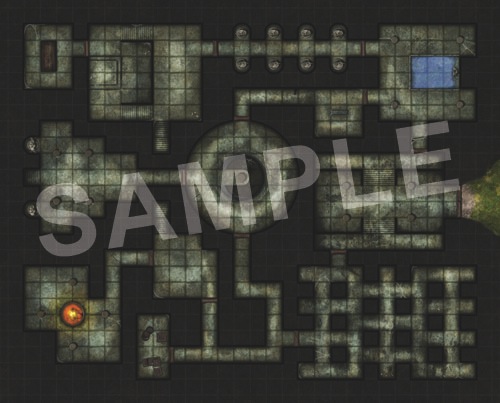
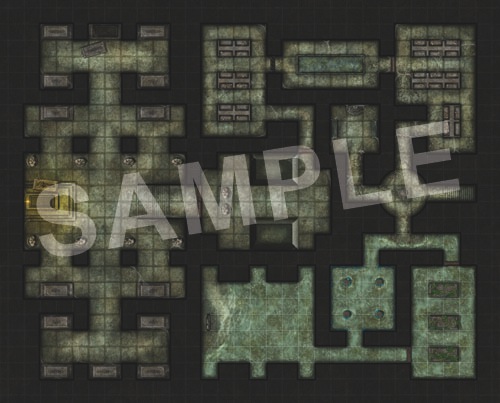
In my quest to find the perfect introductory adventure for this campaign - more importantly, the perfect introductory adventure for a group of people with no idea that an RPG exists outside of MMORPGs - I thought I should go through the various level 1 Pathfinder adventures I have purchased to see what adventure I might be able to simply convert or otherwise adapt to 4E. I also remembered that I had in my collection of battlemaps the GameMastery Flip-Mat: Dungeon from Paizo which coincidentally and/or conveniently depicts the map of the dungeon in the level 1 adventure Crypt of the Everflame.

Perfect!

I think the visuals of the pre-printed map will work really well for introducing the players to a mini- and grid-heavy game like 4E plus, even though this is not a conversion but essentially a new adventure matched to the map, the adventure includes a lot of things - puzzles, dangers of pits, grappling-based battle etc... - that it can be helpful to introduce to new players. I will definitely keep a lot of those things and some of the descriptions, even as a I change everything else.

Now, with that lengthy introduction out of the way, onward to the Adytum of the Skull....

The Adytum of the Skull

Introduction


A Zhentarim cleric of Cyric seeks to awaken an ancient evil which may pose a threat to the entire Silver Marches. And in a strange twist of fate, it falls to a band of young adventures to end this threat....

A dungeon. A dragon. A death knight.


These are three of the key ingredients for this adventure which is designed as a first adventure for level 1 characters in the Silver Marches: In Search of the Unknown campaign. It is an homage to both B1 In Search of the Unknown and B2 Keep on the Borderlands while using the dungeons maps from Paizo's Crypt of the Everflame.


Background


Recent Events


The defenders of civilisation in the North watch the orcs of the Silver Marches carefully, always looking for signs that an orc horde is being whelmed as such an event is historically overdue.


And while it seems that the orcs of the North have taken their first steps toward civilisation with the Kingdom of Many-Arrows, those who truly understand what makes an orc an orc know that it will take but a spark to ignite the orcs in a conflagration of destruction that threatens the entire Silver Marches.


The hamadryad Belaerrauna is one of those who watches for such threats in the North. While most of her "watching" is by magical means, she also has her eyes and ears ranging across the Silver Marches watching the orcs and the other major threats such as the Shadovar of Netheril and the newly resurgent Zhentarim of Newfort.


One of her most important agents is the shifter ranger Nesker whose focus is the orcs of the Nether Mountains. In the past tenday he followed a band of orcs into a grassy vale some 25 miles east southeast of Silverymoon in the foothills of the Nether Mountains.


The vale bore signs of having once been inhabited - the ruined foundations of ancient buildings still remained even if the rubble now looked more like natural boulders - and was dominated by a skull-shaped rocky outcrop on a hill 100 or so feet above the surface of the vale.


Mountain goats were plentiful and they were the target of the orc raiders. Unfortunately for the orcs, the goats were well-protected by the goats' very protective goatherd: a rather large and extremely alert ettin. After the two-headed brute reduced the orcs to vulture-food, Nesker returned to Silverymoon to report the existence of the ruins and, more particularly, the skull-shaped outcropping to Belaerrauna. (Nesker will only go underground in an absolute emergency, and generally not when he is alone.)


Based on what Nesker told her, Belaerrauna performed a divination ritual and thus it was revealed that the dungeon beneath the skull-shaped outcropping - more properly, the skull-shaped entrance - held within it the "iron gauntlet of the Black Lord whose release would herald the Black Age of Bane across the Silver Marches".


Profoundly disturbed by what the divination revealed, the hamadryad now needs adventurers to travel to the dungeon and end this threat before it is unleashed across the Silver Marches.


And that's where the PCs come in….


History of the Adytum


The ruins that Nesker found are all that remains of the village of Orlsgate, an outlying settlement of the (original) empire of Netheril best known for its Jergali monastery and the more mysterious Adytum of the Skull in the hills above the village.


Here the Jergali clerics, also known as scriveners of doom performed their sacred tasks of recording the disposition of the dead and similar rites and rituals, and interred many of their most faithful in the catacombs of the Adytum of the Skull, while dwelling in a separate monastery in the village below.


(The word adytum means that part of a shrine where the public were forbidden to enter.)


This all came to an end after the apotheosis of Bane the Black Lord.


The more fanatical of Bane's followers knew that the Black Lord's power - and the power of Bhaal and Myrkul, the two other members of the Dark Three - came from Jergal who strangely surrendered his divine portfolios to Bane, Bhaal, and Myrkul with little resistance.


For the more fanatical Banites, this episode that took place in the mysterious realms of the Astral Sea needed to be played out here in Toril also. As a result, Haldroun Duskmantle, a former paladin of Jergal  who converted to Bane, led a vicious pogrom across the border areas of the empire of Netheril destroying Jergali monasteries, temples and shrines including here at Orlsgate.


However, when Duskmantle entered what is now his tomb in the Adytum of the Skull, the cold wrath of Jergal was unleashed and Duskmantle's life was taken from him. The Pitiless One cursed his former paladin to forever guard the Adytum of the Skull from other defilers and he remains entombed in the Adytum until this day.


While Bane could not directly stop this from happening, he was able to corrupt the curse so that Duskmantle's doom was not tied to the Adytum of the Skull, per se, but to a skull-headed mace wielded by one of the scriveners of doom the Banites had slain. However, when a Banite cleric tried to recover this mace from the body of the dead Jergali at the Black Lord's behest, the mace could not be found.


The mace still exists hidden within the Adytum. If it is found, it can be used to awaken and command Duskmantle who possesses the powers of a death knight. A Cyricist cleric, Halazondar, from within the ranks of the Zhentarim recently discovered a very incomplete version of this tale in the Vault of the Sages in Silverymoon.


Halazondar believes that the skull-headed mace will allow him to awaken and control the death knight, Haldroun Duskmantle, who, in turn, will be able to command the barrow wights and other undead of the Tombs of Deckon Thar thus providing the Zhentarim with a major advantage in their quest to dominate Silverymoon Pass (more of this story will be revealed in the next adventure).


What Halazondar does not realise is that the returned death knight is an avowed Banite who will eventually shake off the control that the mace will initially afford.


With the coming of spring, Halazondar is making plans to set out from Silverymoon (where he has secretly wintered) to find the Adytum of the Skull. With Zhentarim soldiers in tow, the Cyricist will arrive in the vale just before the PCs finally exit the Adytum….

Synopsis

Hired by (see adventure hooks), the PCs prepare to travel roughly half-a-day to the east of Silverymoon, into the foothills of the Nether Mountains. While it is spring, it is only the very beginning so the weather is quite cold plus there are spring rains and lots of groundwater from melting snow.

There is no road to follow, only directions and landmarks, but the PCs soon find themselves in the hills and under attack by orcs. They may have been ambushed, or clever play (with appropriate skill checks) may have resulting in the PCs doing the ambushing, but eventually the orcs are defeated and the PCs continue on.

Eventually the PCs come to a fairly flat vale overlooked by a skull-shaped structure in the hill above. Mountain goats are common and eventually they encounter the acid-scarred goatherd, an ettin named Gorbash Ghamorz. They may defeat the ettin in battle or they may negotiate with him/them to defeat the black dragon that dwells in the entrance to the Adytum of the Skull: in the latter case, the real reward is being forewarned of the dragon's existence.

The PCs may rest at this point or may push on into the Adytum. Ultimately, though, they enter the Adytum through its broken doors and encounter the very young black dragon known as Skullface. The defeat of the black dragon allows them to press on. The dungeon is explored, various undead and other creatures (possibly including the mercenaries known as the Whiteskulls) are deal with, culminating in what is likely to be the final encounter: a grand melee with the cursed undead warlord, Haldroun Duskmantle:
Haldroun Duskmantle: former champion of Bane, now a death knight cursed by Jergal
The PCs may then choose to explore some more in order to complete their major quest(s) and then they will (most likely) return to Silverymoon for their rewards. One small problem though: the return journey will see an attack by a large group of orcs which will eventually be complicated by the arrival of a young bulette drawn to the commotion. After that, their return home is safe and peaceful.


A Quick Note on the Maps

I'm not really sure of Paizo's policy on posting maps directly from the adventure so the maps I've posted - with the large SAMPLE watermark through them - are publicly available on Paizo's site here and here. Suffice to say, if you like the ideas behind this adventure, you're going to need to buy either the GameMastery Flip-Mat: Dungeon and/or Crypt of the Everflame from Paizo.

Monster Roster

I will post all the stat blocks in separate posts but I will just note the monster levels and types here. Please note that I use AD&D hit dice to work out the level of a monster simply because it gives me a much larger variety of creatures to use in Heroic Tier - and early Paragon Tier, if necessary - where I prefer to run my games.

And, frankly, I just find it makes more sense but I am also conditioned by many years of the pre-4E versions of D&D.
  • Ankheg - level 3 lurker;
  • Ant, giant - level 2 soldier;
  • Crypt thing - level 1 solo controller;
  • Ettin - level 6 elite brute or level 1 solo brute;
  • Frog, giant - level 1 controller;
  • Ghast - level 4 soldier;
  • Ghoul - level 2 soldier;
  • Manticore - level 6 artillery or level 2 elite artillery;
  • Mummy - level 6 brute or level 2 elite brute;
  • Naga, dark - level 9 controller or level 5 elite controller;
  • Ogre - level 4 brute;
  • Salamander - level 7 soldier or level 3 elite soldier (skirmisher?);
  • Skeleton - level 1 skirmisher;
  • Wyvern (maybe eating their horses outside) - level 7 skirmisher or level 3 elite skirmisher;
  • Leucrotta - level 2 elite brute or skirmisher;
  • Orc - level 1 brute;
  • Orc, youth - level 1 minion brute;
  • Haldroun Duskmantle, death knight - level 2 solo soldier.
Links 

Here are the links to the other parts of the adventure:
  • Part One: In Search of the Unknown
  • Part Two: Adytum Level One
  • Part Three: Adytum Level Two
  • Part Four: Conclusion


Thursday, 26 December 2013

Silver Marches Sandbox 3 - Keep on the Borderlands

My previous post suggested ways B1 In Search of the Unknown, after which this campaign is named, could be incorporated in a sandbox set in the Silver Marches. And what follows B1 In Search of the Unknown? Why, B2 Keep on the Borderlands, of course.

I find that B2 Keep on the Borderlands, particularly the main adventuring site, the Caves of Chaos, seems to try and sneak its way into every campaign that I write. There's something about a valley filled with evil humanoid tribes that are both allied and at odds with one another that seems to be so eminently portable and, of course, game-able.

Considering how much of the real estate, as it were, of the Silver Marches is covered in hills and mountains, and also how many tribes of orcs and other humanoids are identified in 3E's Silver Marches, placing the Caves of Chaos is a really simple endeavour. What is more of a challenge, however, is finding a suitable location for the titular keep.

Mike Schley's outstanding map of the Silver Marches is really large and my plans for this campaign involve narrowing my focus to a 100 mile radius circle centred on Silverymoon. You can see some of that - and a lot more - on the following extract from the main map:
Some 60 miles east northeast of Silverymoon is Hawks's Nest, a location that is barely detailed in FR Realmslore. All that I can find boils down to it being a small watchtower at the top of Silverymoon Pass from where a dozen or so Knights in Silver protect the pass during the months when it is used by travellers.
 
However, that description dates back a century or so as it comes from 3E's Silver Marches. I think the idea that Hawk's Nest has been expanded into a larger keep from where scouts are sent out to monitor the Ripped Gut and other orc tribes to ensure that they're not whelming into a horde that could threaten Silverymoon makes a lot of sense. And, who knows?, perhaps other more secret threats from, say, the Underdark have arisen in the years since the Spellplague necessitating an expanded presence of Silverymoon's defenders at this key point in the Silverymoon Pass.

So that's the titular keep taken care of from a background perspective. Now for the Caves of Chaos:
This picture is from a WotC book (I think 3.5E's Dungeonmaster's Guide II) and is supposed to depict the Caves of Chaos from B2 Keep on the Borderlands... but it doesn't really match the map in that adventure. Nevertheless, it's an interesting take on the Caves of Chaos and one that could inspire a rather interesting adaptation.

The original Caves of Chaos included multiple humanoid tribes - from memory: gnolls, goblins, hobgoblins, kobolds and orcs plus a solo ogre and a solo minotaur - with no hint as to how they might successfully co-exist in such proximity to each other. The closest we have to a hint is the presence of mysterious shrine of or to "evil chaos" and that's something I would like to give some thought to because I think the Caves of Chaos work best when you first decide what has caused such disparate races to co-exist relatively peacefully.

In my previous post, I posited the presence of a group of Netherese in a dungeon adapted from the one in the B1 In Search of the Unknown adventure and I am going to again run with this idea at the risk of creating a plot for this campaign rather than a simple sandbox.

And here's the basic idea: what if the Netherese are using some relic of evil - some of the 1E artefacts such as the Regalia of Evil might provide inspiration - to draw these evil humanoids to this location where they are brainwashing them and training them for a mass assault on Silverymoon when the time is right.

The shrine of "evil chaos" instead becomes a temple of Shar presided over by a shadar-kai invoker of the Mistress of the Night. The keep of Hawk's Nest also plays host to a secret trio of Sharran assassins, actually sorcerer/monks from the order of Dark Moon monks, who may be used by the Netherese to punish those PCs who strike against the Caves of Chaos then think they are safe when they return to the keep at Hawk's Nest (and generally they are but, at some point, even new players need to learn to be scared of assassins in the night).

Another option involves focussing solely on orcs but arranging them by tribes. In such a case, these orcs include outcasts from Many-Arrows who are frustrated with the trappings of civilisation that now surround the orcs of that kingdom. These outcasts believe that this is not the orc way and they have gathered here in the Nether Mountains to build their strength until the point where they can wash away civilisation's stain.

The shrine of "evil chaos" thus becomes a shrine or temple of Gruumsh. And just as Gruumsh replaced Talos, Talos also replaced an earlier deity, Kozah, as the Storm Lord. I rather like the idea that this temple of Gruumsh was once a temple of Kozah known as the High Altar of Storms (and that's a nod to Warcraft II). Perhaps the orcs can perform ritual sacrifices here that allow them to call down destructive storms in the Silverymoon Pass providing both an additional adventure hook and an extra challenge to overcome.

I'm avoiding a Zhentarim connection but it does remain an option: the whole plan could be a Zhentarim operation and the temple could be devoted to either Cyric or Bane. I've used that idea so many times that I don't really want to use it again (plus I find that using Zhentarim tends to get me building more a plot-based campaign which is not what this campaign is meant to be) unless I somehow feel that it would be the best possible idea based on the players and the choices they have made.

Ideally, I would like to run this as the second adventure in the campaign - with In Search of the Unknown being the first - which suggests that at least one of the hooks could involve uncovering a Netherese plot following clues the PCs uncover in the first adventure and assuming that the shrine of "evil chaos" is now a temple of Shar. However, I really would prefer to avoid any hint of a plot except that which develops organically.

I rather like the idea of the PCs, following the success of their first adventure, being hired by the Knights in Silver to travel to Hawk's Nest and determine if there is a link between a series of unnatural storms afflicting Silverymoon Pass and mass movements of orcs from tribes that normally fight on sight but yet seem to travelling together. This is based on the idea that the shrine of "evil chaos" is now a temple of Gruumsh-who-was-Talos-who-was-Kozah.

Finally, if the Zhentarim are involved then the humanoids will definitely be raiding merchants travelling on the Silverymoon Pass (except for those who pay for Zhent protection). This option suggests that the adventure hook could come from the Knights in Silver seeking to remove the threat posed by the orc et al bandits or from a group of merchants concerned about their losses. It also suggests the possibility of some intrigue and adventure within Silverymoon as the PCs seek to first unravel a Zhentarim conspiracy before heading to Hawk's Nest for a more traditional adventure.

I think the sandbox is taking shape.

Monday, 9 September 2013

Land Under Shadow - A New Campaign

The Headless Zhent
If I kept a formal D&D/Forgotten Realms bucket list, one of the things on that list would be to run a traditional Ed Greenwood-like campaign set in the Dalelands - specifically Shadowdale - involving the Zhentarim, the drow and the PCs acting as foils against both.

Shadowdale featured quite heavily in the first two boxed sets for the Forgotten Realms: the legendary Old Grey Box included, inter alia, a census of Shadowdale's inhabitants while the revised campaign setting gave Shadowdale its own separate booklet that also included an adventure involving drow beneath the Twisted Tower.

It's the latter adventure, and Shadowdale: The Scouring of the Land - the updated and heavily revised version published for 3.5E, that I particularly want to draw upon for my Land Under Shadow campaign. (By the way, Land Under Shadow was a former name for Shadowdale when it was under drow rule.)

Background

The year is 1479 DR, the Year of the Ageless One, the first year of the Forgotten Realms Campaign Guide for 4E. This is a post-Spellplague campaign.

The year before the campaign starts, Elminster and Manshoon destroy each other in spell-battle. This battle spills over and also destroys Elminster's tower which is now a ruin... but a high magic ruin. Picture the stones of the tower whirling around each other like some strange, vaguely tower-shaped asteroid field with flashes of silver runes and blue flames intermittently bursting forth.

This sets the scene for what happens next. Shadowdale is now without powerful protectors - Elminster is now dead and the Knights of Myth Drannor are either long dead or long gone - and that makes room for the PCs to play the role the Knights of Myth Drannor once did, assuming that they want to do so.

Manshoon's death has created a leadership vacuum in the Zhentarim... which is filled by Manshoon. A much weaker clone of Manshoon has been awakened by a beholder mage and is quietly rebuilding his personal power even as he manipulates the Zhentarim to become the Black Network it once was and not just loosely affiliated bands of petty mercenaries under the "leadership" of Cyric-worshippers.... 

Old families of Zhentil Keep who took refuge across the Moonsea region after its destruction by the Netherese are now back in the 'Keep and rebuilding the city that was once the home of their families. They do not know that the Zhentarim are being rebuilt concurrently... and using the trade being driven by the 'Keep's rebuilding to rebuild the Black Network as an economic force.

Zhents have infiltrated Shadowdale once again - Daggerdale is already under their control - and plan to conquer the dale directly or indirectly so as to control all of the trade routes leading to Zhentil Keep. And the indirect path to conquest is to let their new-found drow allies do the dirty work for them....

House Xorlarrin drow from Menzoberranzan have made the long journey by portal to the tunnels beneath the Twisted Tower of Ashaba at the behest of Lolth. It seems the key to Lolth's plan to create a Demon Weave lies within three altars once used by House Dhuurniv drow during the Sharran plot to tear the Weave in the decade before the Spellplague. Those altars need to be reclaimed and reactivated to birth the Demon Weave....

And the PCs stumble into all of this. There are Zhents on one side of Shadowdale and drow on the other, more or less. An alliance between the two - there is an existing alliance but it is fairly limited in scope - could be devastating for Shadowdale and it will be up to the PCs to stop this and the nascent Demon Weave. Or not.

13th Age


My plans for the Land Under Shadow campaign include a Caves of Chaos-like area - as in, the caves from B2 Keep on the Borderlands - that would allow the PCs to make repeated forays without having to, necessarily give too much thought to the larger plot. In other words, the area is set up to provide a series of scaling dungeon delves that would probably suit a group of new players as much as I hope to make it work for my veteran players.

Over the past few days I've been looking at the wonderful new d20-ish game 13th Age by Rob Heinsoo and Jonathan Tweet and thinking about how to adapt it to the Forgotten Realms simply because it looks to be incredibly suitable for new players. 

The combination of the one unique thing, player-created backgrounds in place of skills and icon relationships - not to mention a character generation that is elegant in its combination of customisation, crunch and simplicity - makes it look like it's actually a game I could use to introduce new players to fantasy RPGs... but still have a game they could still keep playing once they became RPG veterans. (4E is still my favourite fantasy RPG but that doesn't certainly doesn't blind me to the merits of 13th Age - or how much 13th Age demonstrates what a dud Wizards of the Coast has D&D Next aka Advanced Dungeons & Dragons Third Edition).

I just want to make a few comments about these three things - one unique thing, player-created backgrounds in place of skills and icon relationships - in the context of the Land Under Shadow campaign and an idea I had for one of the PCs.

In 4E terms, I was thinking of a human (race) paladin of Torm, fighter or warlord (class) who was a (former) Purple Dragon knight (character theme) who had been personally disgraced because his uncle or older cousin, the commander of his unit, had turned traitor betraying his unit and the nation of Cormyr to the Zhents and then fleeing from Cormyrean justice into the Dalelands  (my plan at the moment is for this renegade to now be the new lord of Daggerdale which is where I plan to set a possible continuation of the Land Under Shadow). The PC would have resigned his commission in the Purple Dragons to come to the Dalelands and bring his relative to justice thus restoring his personal and family honour.

How could I make this work in 13th Age?
One Unique Thing
I am a noble of knightly rank of House Cormaeril but am in disgrace as a result of the treachery of my uncle/older cousin and now seek to bring him to justice.
Backgrounds
  • Purple Dragon knight +5 (military tactics, horses, etiquette, diplomacy, history of Cormyr)
  • disgraced noble +3 (sense lies/motives, penetrate disguise, disguise, dissemble for the greater good)
Icons
  • House Cormaeril, positive relationship, 1 point
  • The King of Cormyr, conflicted relationship, 1 point (the PC's goal is to turn this into a positive relationship)
  • The Zhentarim, negative relationship, 1 point
It's a really interesting way to put a character together and, I think, something that a new player can readily grasp. It's also interesting looking at the 13th Age version of the character and then using that to further information the 4E version of the PC. (I might do that for the existing 4E characters in my Neverwinter: Year of the Ageless Ones campaign and see what insights it provides me as the DM in terms of what other story options to offer the characters.)