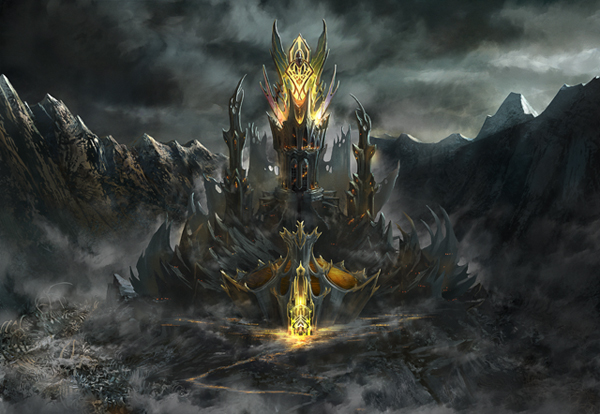
Showing posts with label Dread Rings of Thay. Show all posts

Sunday, 15 March 2015

Stat Blocks - Creatures of the Dread Ring, Part Two

I prepared quite a few stat blocks for the Dread Ring in the Neverwinter Wood. in large part because there is a much larger dungeon to explore - the Dread Ring itself - than what my players in Neverwinter: Year of the Ageless One are likely to end up exploring.

For those who have access to Return to the Tomb of Horrors, my version of the Dread Ring includes the dungeon of the Black (aka Bleak) Academy including the triple entrances to the infamous Tomb of Horrors. Sadly, my PCs won't be going there as my players are very cautious and dungeon-averse except where it meets the needs of the plot. But delving for delving's sake? That isn't what they do. Cowards.... ;)

Sword Fodder

The original custom undead for the Red Wizards of Thay was the dread warrior which first appeared in 2E's Dreams of the Red Wizards (IIRC, otherwise it was the Spellbound boxed set). They have survived all the way to 4E but now exist in multiple forms: the dread archer, dread guardian, dread marauder, and dread protector. Although they are level-appropriate and well-designed (they're from Monster Manual 3), I decided to go with some custom monsters for the Dread Ring although they are likely to make an appearance later. I mention them only for the sake of completeness in case someone reading this is looking for some undead with Thayan flavour.

In my former post (Part One) with creatures of the Dread Ring, I included the bone weird as a way of showing the effects of the Dread Ring in terms of creature unusual undead. The Dread Ring zombie comes from that same way of thinking and is also a lurker.

It is based on Strahd's dread zombie from Open Grave - insofar as its ability to "respawn" - but with a lurker twist. In this case, it has the ability to slam someone into the earth of the Dread Ring and then trigger the ability of the Dread Ring to swallow that creature.

I see these zombies as looking like corpses that have been freshly disinterred with clumps of dirt and even crawling worms filling the gaps where the flesh has rotten away. Also, the nature of their method of movement and "respawning" justifies them popping up pretty much anywhere in the Dread Ring.

Thay has always used gnolls as a common slave race and as expendable sword fodder. As a result, I like to include gnolls with any Red Wizard encounters. In this case I went with gnoll archers because they struck me as very appropriate guards for the Dread Ring in this wilderness location. They could also be used to supplement the food supplies of the living Thayans.

But that's just background.

In other posts, I have mentioned that my basic guideline for monster levels is their hit dice in 1E or 2E. Gnolls have 2 hit dice in those earlier editions so that would translate to a level 2 artillery. A standard level 2 monster has the same XP value as a level 10 minion and I definitely wanted these gnolls to be minions so that's why they're level 10 artillery.

The stat block is very simple with no conditions to track. I decided to avoid a normal melee basic attack based on a melee weapon and do something I have done with orcs before and allow these gnolls to make melee attacks with their ranged weapon. Yes, clearly I have watched the Lord of the Rings movies. Point blank shot also has a push effect so that will hopefully allow the gnoll archer to get out of melee range.

Including the Thayan knight in my roster of monsters for the Dread Ring was definitely going to happen for two reasons:
1. I have four Thayan knight miniatures which I have been wanting to use for a while.
2. I really like the Wayne Reynolds art showing a Thayan knight defending a Red Wizard and have used it before to show players whom they were fighting.

I'm actually really happy with how the stat block turned out. It feels a lot like an assault swordmage in the way it plays but it remains really easy to use while being tactically interesting. I suspect I will also be using higher level versions of this stat block in the future as I really like the way it works.

Thayan Banites

One of the changes inflicted on FR courtesy of the events surrounding the Spellplague was that Szass Tam made a deal with Bane and promised him that the Black Lord's religion would be the only one permitted in Thay. (That's the short version.) As such, it makes sense that a Thayan fortress such as the Dread Ring would also include some Thayan Banites.

The dark acolyte of Bane is a minion controller that exists as a speed bump - and hold person can definitely be a speed bump. Also, as much as possible, I try to include ways that the minions I design can survive a hit: in this case the dark acolyte can possibly avoid a melee attack by using cause fear to push the attack away.

The masters of the dark acolytes are the dark hands of Bane, another nasty controller. Their signature/at-will power Bow Before the Black Lord! is really all that they need to mess up the PCs' mobility as it even slows on a miss and, on a hit, prone plus unable to stand can, in the right position, be as effective as a stun.

As you would expect from clerics of the deity of tyranny, they can also dominate but that is once an encounter but it is reliable so, if it misses, it can be used again.

They're quite effective in melee as well, thanks to their aura 3 which gives them and their allies combat advantage against their enemies.

In short, they're nasty.

The final Thayan Banite is the hateful zealot of Bane which is essentially a pursuing avenger in monster form. The reason for the use of the word hateful is because, in 3.xE, one of Bane's granted domains was hatred and all the Banite clerics I ever statted up as NPCs in 3.5E had hatred and tyranny as their two domains.

Anyway, the hateful zealot feels a bit like Darth Maul in the way it plays. Oath of enmity is, of course, the signature avenger ability that ensures that the hateful zealot is very likely to hit while Feel the Hate! makes sure its oath of enmity target is not going to get very far before the hateful zealot catches up with it. And, of course, once it has caught up with its target, bond of pursuit should see it stay in melee or charging range.

I also really like this stat block and expect it to provide a model for any other avengers "monsters" I might build in the future. 

Red Wizards of Thay

Before 4E changed everything, Red Wizards of Thay were organised around the eight schools of magic. Post-4E - more accurately, post the novels by Richard Lee Byers where he, inter alia, introduced Dread Ring and blew up Thay - the Red Wizards largely focussed on necromancy.  5E Thay seems to be heading back to the older version of Thay but who really knows as WotC doesn't seem to want to publish a new FR campaign setting, but I digress....

The apprentice necromancer, like the dark acolyte minion above, is a nasty speed bump. Its primary attack - rotting doom - stops the target from receiving healing. That's tactically interesting too because not being able to heal is not that serious in the first couple of rounds of combat but becomes potentially very nasty later. Do the PCs deal with these minions first to ensure that they have access to healing later or do they take the fight to the primary threats? Hmmm, decisions, decisions....

... and it's a decision made more complicated because the Thayan necromancer that poses the greater threat is also capable of applying that same condition with its ranged basic attack.

But before it does that, grasp of the grave allows it to lay down an ally-friendly zone that lasts until the end of the encounter. Basically, this power is supposed to model a zone of grasping hands and claws of various corpses trying to drag the necromancer's enemies beneath the earth. Hmmm, maybe I should have made it difficult terrain for enemies as well....

My plan is always to pair the necromancer with at least one Thayan knight and anyone closing on the necromancer could end up attacking the Thayan knight in melee instead of the necromancer because of the knight's aegis of the Thayan knight. Hopefully that will give the necromancer some staying power plus its defensive staff melee basic attack can allow it to move away from a melee attacker without provoking opportunity attacks.

And they're the basic generic Thayan forces at the Dread Ring. There are named NPCs such as Valindra Shadowmantle inside the skull-shaped fortress at the centre of the Dread Ring but it's highly unlikely my PCs are going to encounter them. If they do, I will post the stat blocks here.

Thursday, 5 March 2015

Stat Blocks - Creatures of the Dread Ring, Part One

I've been sitting on an actual play post for several weeks now involving my 4E PCs seeking out the Dread Ring in the Neverwinter Wood. There's been a session already with a couple of combats and there is at least one more session to come.

Here are the stat blocks for the creatures they have/will encounter but the stat block for the lich Valindra Shadowmantle can be found <here>.

Askarro the Unlich

I believe I came up with the name Askarro about 20 years when watching some crappy fantasy-themed movie on TV. I never used it until the second or third session of this campaign back in 2012 and it was for an undead wizard I termed an "unlich" or "lich construct" depending on how I was feeling on a particular day.

This was, of course, simply a way of having an undead spellcaster be able to return to "life" so as to become a recurring foe without having said spellcaster be as powerful as a normal lich. And Askarro is indeed a recurring foe. When the PCs first fought him he was a level 3 elite artillery. The more recent confrontation was with him as a level 7 artillery - same XP value as a level 3 elite - with the same powers but changes to his number of actions, damage, defences etc....

Suffice to say that the PCs were surprised to see him back after they defeated when they were level 2 or so.  Earlier, Askarro and his undead wyvern mount had something of a roving brief over the lands north of Neverwinter. Since being "rejuvenated", he and his mount are now the chief guard dogs of the Dread Ring, tirelessly soaring above the fell location and searching for intruders which they engage in conjunction with one of more packs of werewolves (see below).

One of the things some people don't like about Paizo adventure paths is how the NPCs often have really extensive backstories that never see any actual use in play. Askarro was a bit like this for me. I had him as a thrall of Eltab and an expert in some of the magic used in the construction of the Dread Ring. (IMC, Eltab is the master of rune magic that can be used to release primordials rather than bind them: the complete opposite of the purpose of rune magic described in the runepriest entry in Player's Handbook 3.)

Despite his pact with Eltab, Szass Tam valued his knowledge and was responsible for Askarro's undead status. And that's all I will say about Askarro for now as it was and is rather irrelevant in terms of actually deploying him in combat and he is simply a combat encounter and a simple one at that: death lightning, rinse and repeat.

By contrast, Askarro's wyvern is much more tactically interesting and its ability to snatch, fly, and drop was fun to use in play. Sting of undeath also has potential but needs further development; I would love to take a fresh look at that in radiant keyword-heavy party especially where there is an invoker with radiant attacks that only damage enemies. In such a case, I would be so tempted to have the target treated as a enemy while it is subject to that effect.

Grey Wolf Werewolf

In the Neverwinter Campaign Setting, the Grey Wolf tribe of the Uthgardt are loyal servants of the Netherese who are delving the ruined city of Xinlenal east of the Dread Ring. I decided in my campaign that the Netherese had been defeated by the Thayans (frankly, I had no use for the Netherese as I had enough factions already) due to a combination of the silver-fanged treant Silvermaw and the Bones of the Thunderbeast. The Bones are the remains of an apatosaurus and are a sacred relic of the Uthgardt barbarians. The Thayans have corrupted the Bones through (clichéd) evil rituals that has also allowed them to subvert the loyalty of the Grey Wolf tribe.

And that's my long way of explaining why the Thayans are using werewolves as guard dogs.

Bone Weird

As far as I know, the bone weird first appeared in 2E's Return to the Tomb of Horrors. No doubt inspired by the serpentine water weird, the bone weird was a snake-like conglomeration of bones animated by negative energy.

When I was thinking about creatures to include in the encounters in the Dread Ring, I wanted undead that were not common and the bone weird sprang to mind. I thought in a place like the Dread Ring where death and undeath were such real presences, that the remains of various creatures would sometimes spontaneously animate: these are the bone weirds.

I also imagined them crawling through the earth like the undead version of earthworms or ankheg and that made me think of the bulette. And looking at the stat block for the young bulette in Monster Vault, I realised that I had the creature I needed with a modicum of reskinning....

Living Wall

And here's another obscure 2E monster: the living wall. I first saw these in the 2E Monstrous Compendium; I have no idea where they first appeared.

I was thinking that the walls of the Dread Ring are largely ruined by the failed ritual performed there but they must have also absorbed some of the ruinous necromantic and demonic energy that was unleashed. Thinking about the walls being animated in such a fashion made me think of the living wall and then it was a matter of converting them to 4E.

The 2E version of the living wall could be incredibly complex (and powerful!) depending on what creatures it had absorbed. I decided to markedly simplify it as a monster and simply have it grab and absorb a creature and then share damage with its victim to the point where I am left with a fairly simple stat block that is definitely a soldier.

If I was going to use them again, I would consider other options such as making them lurkers and having them, much like a gargoyle, be able to assume a stony form but also to capture a creature and petrify it with them before leeching away its life force. I also thought about having it dominate a creature it absorbed and forcing it to attack.

But simple is often better and I'm rather happy with the simple stat block in this case.


Saturday, 21 February 2015

Starter Set Sandbox 18 - Using Red Hand of Doom to expand LMoP

I decided to post this for two reasons:

1. I was about to post something like this anyway because it's the direction that my own game is taking; and 
2. +Banesfinger posted an interesting question in the comments at the bottom of <this post>.

However, I need to add one disclaimer: I am not a fan of Tiamat. I also think she has been horribly overused as a BBEG across multiple editions of D&D and even in the execrable D&D cartoon from the 1980s. She also doesn't seem to me to be a classic FR villain but, of course, YMMV. 

But there is one major advantage of sticking with the idea of Tiamat as the BBEG of an adaptation of Red Hand of Doom: it will help tie the adventure into the wider events of the Tyranny of Dragons adventures, Hoard of the Dragon Queen and Rise of Tiamat, should that be important for your game.

The Simplest Approach

In theory, the simplest approach involves simply finding a section of the regional map from Lost Mine of Phandelver and simply overlaying the regional map from Red Hand of Doom. However, I emphasise in theory as there is nowhere that is really a good match particularly when you consider the map of the Elsir Vale in Red Hand is some 320 miles (EW) by 240 miles (NS) which is larger than the regional map in Lost Mine!

In practice, you really would need to move the whole adventure further east, off the regional map from Lost Mine, and then place the key locations from Elsir Vale elsewhere. I may edit in some comments about that another time but, for now, I want to focus this post on using Red Hand to expand a campaign set in and around Phandalin.

The More Complicated Approach

This involves ditching the Elsir Vale map from Red Hand and relying instead of placing key locations, or reasonable analogues, on the regional map that came with Lost Mine. 

When Red Hand of Doom was first released, WotC posted the introduction and a synopsis of the five parts on their website for public consumption. I saved a copy of this and it is probably still there buried beneath the sheer incompetence that characterises any WotC attempt at using modern technology in conjunction with D&D.

What I am going to do is, beginning with the introduction, quote each section of the synopsis and provide some ideas as how to make this work in and around Phandalin.
The quoted sections will appear in this format.
Introduction
Red Hand of Doom casts the player characters in the role of heroes fighting to stem the advance of Azarr Kul's horde. There are far too many enemy warriors for the PCs to deal with them all personally. Instead, the heroes undertake vital missions that influence the outcome of the war. These missions include the following:
  • Spying out the movements of Azarr Kul's army.
  • Defeating roving bands of marauders.
  • Leading the effort to rally an elf army to meet the Red Hand horde.
  • Disrupting an alliance between the Red Hand and a powerful lich.
  • Killing important enemy commanders, champions, and monsters.
  • And, finally, infiltrating the Fane of Tiamat to defeat the Red Hand warpriests and their leader in their secret stronghold.
The adventure is divided into five parts, describing five key locations the PCs are likely to explore in the course of the adventure. Event-triggered encounters are also woven into each of the five parts. The adventure locales and events are designed to interact: Events will steer the heroes toward adventure locales, and things the heroes do in the locales will trigger events.
At this point you need to decide whether to stick with the existing BBEG or to change it to something/someone else.

In my game, the real threat is the Zhentarim but the Zhentarim are split into two factions: the more traditionalist, but smaller, Bane-worshipping faction and the newer and larger Cyric-worshipping faction. The Banites need a significant victory to return to dominance of the Zhentarim so they're the ones behind the Red Hand of Doom. And an aspect of Bane is the replacement for the aspect of Tiamat as the final "boss" monster. (It's also helpful that I have an aspect of Bane miniature, but lack an aspect of Tiamat.)

That also means that the various spawn of Tiamat that are encountered during the course of the original Red Hand of Doom don't really have a place in my adaptation. That said, there is a beast of Bane template in 3.xE to represent creatures that have been touched by the Black Lord. So, for example, rather than having those greenspawn razorfiends flying around, I will just have wyvern or manticore beasts of Bane.

Azarr Kull also does not fit into my more Zhentarim/Bane-oriented adaptation. Rather than the half-dragon, the leader of the horde is either a hobgoblin warlord (and possibly also an evil paladin) or a human Zhentarim commander (who may also be an evil paladin: if you have the 5E DMG then you will also know such things exist in 5E too!). I don't need to make a decision about his identity right away so I will leave that undetermined for now.

However, for those of you who are sticking with the Tiamat-based storyline, unless you're running 3.xE you will need to convert the spawn of Tiamat to your preferred edition.

Part I: The Witchwood => Raid on Phandalin
The adventure begins when the player characters confront a powerful warband of raiders threatening the small town of Drellin's Ferry. Under the command of Wyrmlord Koth, the warband of hobgoblins and goblins lairs in the ruins of an old keep buried in the dense Witchwood, scouting out the surrounding lands in preparation for an attack. Soon the Wyrmlord and his warband intend to sweep down on Drellin's Ferry and slaughter its inhabitants.

In the course of their fight to drive off the marauders, the PCs learn that Koth's warband is just the tip of the spear, and that a horde of goblins, hobgoblins, and their allies is marching south. They also learn that their enemies are driven on by the fanatical warpriests of Tiamat. Drellin's Ferry can't be saved, but the heroes can give the townsfolk time to flee by wrecking a bridge on an old dwarf road the Red Hand horde needs to cross. There they confront the youngest of the Red Hand's dragon champions, a green dragon named Ozyrrandion.

By the end of this part, the war has begun. Thereafter the PCs divide their time between fighting to stem the advance of the Red Hand horde and foiling the plans of the other Wyrmlords, whose work will give the horde an irresistible advantage if left to run its course.
Firstly, the easiest thing to do is replace Drellin's Ferry with Phandalin. Sure, there are some terrain mismatches but the goal here is to make Red Hand an extension of Lost Mine: Phandalin is the only option.

There are quite a few options here, and none of them involve an area of forest: ditch the Witchwood.

Instead of destroying a bridge, there is instead a dwarf-crafted tunnel or a key pass that is facilitating the horde's access from the southern side of the Sword Mountains and the Kryptgarden Forest to this side. Collapsing the tunnel or causing an avalanche to block the key mountain pass will buy the "good guys" time to prepare for the horde's arrival.

Oh, and a green dragon may still be appropriate. Maybe it too is a follower of Bane.

Part II: The Ruins of Rhest => Ruins of Leilon
Something has cut off the Old North Road in the vicinity of the Blackfens. None can flee by that route, nor can help from more distant cities reach besieged Elsir Vale. While scouting the swamp and seeking an answer to the question of who or what has cut off the road, the PCs encounter the reclusive owl-riding wild elves known as the Tiri Kitor. From them, the PCs learn that Wyrmlord Saarvith has allied with a black dragon named Regiarax, and together they have established a hatchery of sinister dragonspawn in the ruins of the drowned city of Rhest. The PCs must defeat both the Wyrmlord and the dragon to prevent the appearance of these vicious creatures in the war. If the PCs play their cards right, they can even gain the aid of the Tiri Kitor elves against the advancing Red Hand horde.

At the end of this section, the PCs discover the threat of the Ghostlord (see Part III). Meanwhile, the Red Hand horde is striking deep all across the vale's western marches, and the war is going poorly indeed for the beleaguered humans.
The hatchery is instead in Leilon. This means a different take on Leilon compared to the version I posted earlier in this series of posts, but I would keep the enchanted tower that can paralyse those who gaze upon it.

You could also keep the Thayans if you assume that, as is the case in the 4E Forgotten Realms Campaign Guide, these Thayans are followers of Bane which is, of course, the state religion of Thay thanks to The Haunted Lands trilogy of novels by Richard L Byers. Perhaps these are Thayan clerics who have been instructed by the Black Lord to prepare the wyvern or manticore beasts of Bane in support of the goblin horde. FR purists may find the idea of an alliance between the Zhentarim and the Thayans shocking but they are united by a common religious belief... and it provides further variety in terms of the encounters.

Part III: The Ghostlord's Tower => Master of the Dread Ring/Ebondeath Mausoleum
Azarr Kul brings a deadly new ally into the battle when Red Hand agents steal the phylactery of the human druid lich known as the Ghostlord and coerce this powerful undead menace into joining the war on the Red Hand's side. After gaining possession of the stolen phylactery, the PCs travel into the Thornwaste and do battle with Wyrmlord Ulwai Stormcaller in the lich's lionshaped lair. Eventually, the PCs must confront the Ghostlord himself and either destroy him (no small task) or purchase his neutrality by returning his phylactery in exchange for peace. By the time they dissuade the lich from joining his forces to those of Azarr Kul, the Red Hand horde is bearing down on Brindol.
I don't think a lion-shaped lair fits it with the Neverwinter Wood or anywhere nearby but YMMV. Personally, I think there are at least three other options that would be better:
  1. The Dread Ring in the Neverwinter Wood can be seen on the earlier version of the regional map that was originally published in the Neverwinter Campaign Setting. Instead of a druid lich, the Dread Ring suggests the possibility of Valindra Shadowmantle who now haunts the benighted ruins of the Dread Ring cursed by Szass Tam himself.
  2. I have already covered Agatha's Lair but what if the banshee stood in for the Ghostlord? She doesn't have a phylactery but perhaps, as my post about her lair suggests, there is something else she values than can be used to manipulate her?
  3. Finally, for those who have access to Dungeon 73 and the Eye of Myrkul adventure - fifth in the first Dungeon adventure path, the Mere of Dead Men series -  what about Strongor Bonebag, a former cleric of Myrkul, as the lich that the bad guys control? On a related note, what about the black dragon Ebondoom returning as a dracolich?
Obviously, any of these changes would require a bit of work on the DM's part to create a new lair etc....

Part IV: The Enemy at the Gates => name unchanged
While the PCs have managed to counter some of the Red Hand's outlying efforts, the horde has been advancing remorselessly into human lands. Now the characters confront the main army of the enemy directly in the Battle of Brindol, in which the PCs' actions make the difference between the human city's survival or destruction. Depending on how successful the PCs were in the previous parts of the adventure, the battle can end in anything from a hard-fought draw to a catastrophic defeat. Either way, in the aftermath of the battle it becomes clear that the best chance of winning the war is for a brave band of infiltrators to strike into the heart of the hobgoblin lands and decapitate the horde by destroying the Red Hand order.
Brindol? No! This is a battle for Neverwinter itself, parts of which are still in ruins. Beyond the change of location and the use of Neverwinter's map, this section of the adventure may be largely unchanged.

That said, Neverwinter has a large band of orcs camped out in one of its districts: are they allies - and, if so, do they need to be won over? - or are they enemies? That could add an extra dimension to this section of the adventure, as could negotiations with a unit of Cyricist Zhentarim who may offer their services as mercenaries to help defend the city.

Part V: Fane of Tiamat => Fane of the Black Lord
The PCs assault the High Wyrmlord's stronghold, the Fane of Tiamat, deep in the Wyrmsmoke Mountains. Temporarily checked in the Battle of Brindol, Azarr Kul and his circle of high priests are seeking infernal aid from the Nine Hells, summoning devils and fiendish monsters, including an aspect of Tiamat herself, to break the last human resistance. The PCs fight a desperate battle in the dark temple, and ultimately confront High Wyrmlord Azarr Kul himself in the heart of the Fane of Tiamat.
Clearly I cannot call this the Fane of Bane so if I am going to stick with "fane" I suppose it has to be Fane of the Black Lord. However, I may steal one thing from Tyranny of Dragons: this picture of a temple of Tiamat could just as easily be a picture of a temple of Bane as there is nothing particularly draconic about it.

But if you want a picture that says "Bane" and "Zhentarim", you cannot beat, IMO, William O'Connor's cover art for 3.5E's Mysteries of the Moonsea:


Banite Monsters

And that picture segues nicely into another issue in the event that you're using Bane instead of Tiamat: what do you replace all the dragons with? For me, the quintessential Banite monster is the beholder: use them liberally. And if a straight-up beholder is too much of a challenge, use gauth, their weaker cousins. They have yet to be officially statted up for 5E but I ran one on the fly using a few adjustments to the spectator stat block in the 5E Monster Manual.

Otherwise, 3.xE introduced the beast of Bane template to represent a creature touched by the Black Lord. They had a barghest-like ability to devour a creature and they could produce fear by howling or roaring. It wouldn't take too much to do the same thing in either 4E or 5E and give such creatures as wolves, worgs, hellhounds, manticores, wyverns etc... a howling attack that created some sort of fear effect. And other than that, all you would need to do is change their colour to black with emerald green for their eyes, tongues, breath weapons etc.... (I rather like the imagery of a black manticore firing off bolts of baatorian green steel [that's a substance introduced in one of the 3.xE books: Arms & Equipment Guide, perhaps?].) 

But the main reason to run Red Hand of Doom is to fight goblins and lots of them. And that doesn't change whether the BBEG is Bane or Tiamat.
 
Summing Up

Speaking selfishly, I now have the outline for the rest of my campaign following on from events in Phandalin and possibly a side-trip to the Caves of Chaos. That aside, I think there's a fairly logical progression from Lost Mine of Phandelver to Red Hand of Doom with a penultimate confrontation against the goblin horde around the walls and within the gates of Neverwinter, followed by a final battle in a temple of either Bane or Tiamat with an aspect of the appropriate deity.

While there it doesn't then allow an easy segue into Hoard of the Dragon Queen or Rise of Tiamat because of the level of the PCs, if you were to skip Part V: Fane of Tiamat/Fane of the Black Lord as detailed here then Rise of Tiamat does become a possibility. However, a few more easter eggs may be required to better link it into Rise.

But for my game this is nearly perfect. It's an outline based on a tried and tested adventure and it allows me to continue to feature the Zhentarim as the BBEGs of my first foray into 5E. And that to me feels more like the Realms than trying to stop Tiamat from being freed....

Saturday, 3 January 2015

Starter Set Sandbox 16 - Neverwinter Wood

If you're reading this and you have Lost Mine of Phandelver but are not familiar with 4E's outstanding Neverwinter Campaign Setting, you might be wondering why the map on the right, while covering the same general area as the regional map in Lost Mine, is otherwise a bit different in terms of including a number of other locations that do not appear on the regional map that you're familiar with.

In the context of a post about the Neverwinter Wood, I would point out the Dread Ring, Sharandar, and Xinlenal as locations that don't appear on the regional map in Lost Mine but which will feature below.

Realmslore

FR5 The Savage Frontier


The first reference I can find to the Neverwinter Wood is in The Savage Frontier, although it refers to the Neverwinter Woods (plural). Besides some references to Uthgardt tribes being present, it has this to say
This forest east of Neverwinter seems to have a magical quality about it, or at least an air of mystical secrecy. The always-warm Neverwinter river, which flows out of the wood, has its source deep beneath Mount Hotenow, a sleepy volcano in the northern wood. Fire elementals are said to live deep within Hotenow. The steep mountains to the north of Hotenow hide griffon lairs.

These woods have never been logged by men (they are feared and shunned by the locals), and even today are largely unknown. The depths are said to harbour dire creatures. Orc hordes always go around the woods, never through them.
That's also the description that is regurgitated in The North boxed set. And Volo's Guide to the North says even less, except noting that some logging does take place. (I would refer you to the earlier entry for Thundertree for information about a ruined logging village.)


Forgotten Realms Campaign Setting


The FRCS took a slightly different tack with its description:
This charmed forest to the east of the city of Neverwinter is perpetually warmed by the Neverwinter River that flows from beneath the dormant volcano Mount Hotenow. Humans, and even orcs, fear the wood and tend to avoid it.

Unlike other forests with dangerous reputations, the Neverwinter seldom disgorges great monsters or evil forces - the unease felt by those who know they do not belong in the Neverwinter Wood stems partly from a terrible anticipation that the wood could do them damage if it chose.
Clearly, the Neverwinter Wood is meant to be a mysterious, fey place.

Champions of Ruin


An elven supremacist group, the Eldreth Veluuthra ("Victorious Blade of the People") was, to the best of my knowledge, first introduced in 2E's Cloak & Dagger. A throwaway reference was included to an Eldreth cell being present in the Neverwinter Wood. This reference was barely expanded in 3.5E's Champions of Ruin to two sentences:
The Eldreth Veluuthra claims that the forbidding reputation owned by this mysterious forest is due in no small part to the activities of one of the oldest and largest cells in the organisation. Several other small cells also operate in the area.
Neverwinter Campaign Setting

Sharandar in the Neverwinter MMORPG
I think it is fair to say that there are more words written about the Neverwinter Wood in 4E than in all the other editions combined.

Firstly, it addresses the appearance of the eladrin from the Feywild within the ruins of Sharandar, formerly the capital of the elven realm of Iliyanbruen:
When the Spellplague shook Toril, the Feywild fell once more into alignment with the mortal realm. Over time, many denizens of that untamed world crept, dashed, or strode across the newly weakened barriers.

Some eladrin from the Feywild kingdom of Iliyanbruen - who had fled when Illefarn fell into ruin long ago-decided to return to their ancestral roots. When the eladrin arrived at the portal connecting their forest to Neverwinter Wood, dark fey were already there. After driving out the evildoers, the band erected a military outpost in the surrounding wreckage on both sides of the portal and named it New Sharandar, after Iliyanbruen's former capital. Now the fey have spread through several of the ancient ruins, which time, nature, and intruders have ravaged.

The eladrin want to restore their ancient city and smash in the heads of the pillagers that defiled it. Even though most of the fey reserve their anger for the thieves and ravagers, others aren't so precise in their wrath. These eladrin are enraged at the desecration of their ancestral homes. They believe the entire region is theirs by right, and they'll happily slaughter anyone who dares gainsay them.
(I would refer you to page 126-127 of the Neverwinter Campaign Setting if you wish to continue reading: this is merely a quote.)

From page 174 onwards, the Neverwinter Campaign Setting begins addressing the Neverwinter Wood more directly:
Leagues beyond Neverwinter, a thick press of trees shrouds a foreign world in shadows and fear. In places, the land's brush grows into dense walls, and trespassers must hew through it branch by branch to gain access to the land's private places. Where the thickets are lighter and natural pathways allow for easier travel, the land's aura is no less menacing. Overhead, the canopy's branches and leaves intertwine into wooden fists, blotting out the sun and transforming the idea of" day" into a memory of brighter, safer domains. Travellers who risk entering this looming forest feel baleful eyes tracking their movements. Despite the warm temperature, a coldness creeps inside their clothing, sending shivers down their spines.

This is Neverwinter Wood. Dark and brutal outsiders journey here to steal power, magic, and lives. Monstrous denizens of this world and others dwell here in shadows, glaring in hatred at ignorant mortals who think to tame the wilds. Here, the bones of ancient civilizations that believed their magic a match for the woods reside as testaments of their folly. And here, the ghosts of such mistakes haunt the edges of this foreign reality, never escaping the winter of their lives.
A sidebar entitled Looming Woods then gives this flavour text some in-game effects:
A dark, ominous forest is enough to make anyone nervous. But in Neverwinter Wood, even the unease is unnatural. In areas of the woodland, travellers' disquiet thickens into a supernatural fear, becoming fantastic terrain.

Effect: Living creatures in affected squares must make a saving throw before rolling initiative. Those who fail are surprised during the first round of combat. Living creatures who fail a Perception check while in affected squares are convinced they heard or saw something moving nearby. Finally, living creatures take a -1 penalty to Will and saving throws against fear powers and effects.


Special: Creatures that live in these woods for more than a few weeks grow immune to this effect.
Beyond those general comments, I want to include quotes about three of the locations in the Neverwinter Wood - Sharandar, Dread Ring, Xinlenal - that appear on the map at the beginning of this post.

Sharandar

The ruins are described as follows:
Sharandar's structures were built high in trees, blending harmoniously with the forest's natural growth and forming a crown upon the canopy's brow. The thickest boles supported rounded platforms upon which peak-roofed homes and arching halls were erected. Skilled glassworkers crafted amber-tinted windows that sealed out the weather and gleaming lanterns from which mystical lights danced. Great bridges, both crafted and grown, linked one structure or tree with the next. Intricate knots, carved in wood and tied in branches, adorned ceilings, framed doors, and served as banisters to help keep occupants from toppling off platforms.

So it was. Since then, rot has been feasting, opening soft wounds in walls, ceilings, and floors for intruders to stumble through - likely to their deaths. Handrails sag dangerously, and entire sections of them are gone. Windows and lanterns are missing or shattered. Vines, lichens, mosses, and moulds snake along every surface. Small beasts, birds, and insects have reclaimed the trees, at times sharing the structures' remains with the more dangerous creatures that claimed them as lairs or with skulking invaders intent upon looting.
The descriptions continue beyond this quote and the impression the reader is left with is decayed magnificence. There is also a section further describing further the efforts to reclaim the ruins as New Sharandar but that's not a direction my only comments are heading in.

Dread Ring

My PCs will soon be tackling the Dread Ring as part of their Bones of the Thunderbeast major quest so I am rather biased when it comes to potential of including the Dread Ring as a part of a campaign. I have already covered off a lot of the ideas I have for the Dread Ring <here> (or you can follow this <tag>) but I will include a fairly long quote from the Neverwinter Campaign Setting just to explain the location with a little bit of detail:
In Neverwinter Wood's deepest region, where shadows weigh on travellers like wet wool, something malign lurks. The thick forest ends abruptly, its border abutting a circular field of ash. Animals give wide berth to the site, and the surrounding forest land is blanketed in a chilling, breathless silence. Heavy, stale air - redolent with the tang of disease - resists any breeze, stubbornly squatting over the clearing.
 

A few hundred feet in from the perimeter, black stones rise from cracked, lifeless soil. Walls, pillars, spindly towers, and gaping gates form an uneven circle of nefarious import. This structure, a combination of ritual focus and functional fortress, is one of Thay's Dread Rings. Szass Tam, the lich regent of Thay, created the rings for use in a fell ritual in his quest to attain godhood. His efforts were thwarted, however, and this ring is now the centre of Valindra Shadowmantle's regional efforts. Despite its stones having been broken, its walls hanging open, and its initial purpose going unfulfilled, the structure still holds more power than any sane person would want Thay to possess.
 

Adventurers who approach the ring do so without their mounts, since typical beasts step into the circle of ash only if they are forced. Familiars, beast companions, and the like are apt to proceed, snarling or whimpering, if their masters do.
 

Even within the unnatural oppression of Neverwinter Wood, the ring's malignity stands out against the surrounding landscape's. Characters who have training in Arcana automatically sense the magic in the broken walls of the Dread Ring (though they cannot tell its purpose). As their teeth chatter, their palms sweat, and their souls clench, even the most unobservant adventurers can tell this is a warped place.
Suffice to say, that's the sort of place that almost any DM could turn into a truly horrifying adventuring  environment.

Xinlenal

Some 20-25 miles away from the Red Wizards of Thay with their Dread Ring, you have the other ubiquitous power group of the 4E Realms, The Netherese or Shadovar, seeking to recover one of their flying cities that crashed during the whole Karsus debacle a couple of thousand years ago:
In the woodland's eastern reaches, the forest floor smacks into an earthen wall that rises about 60 feet before stretching into a plateau. Although the rise is not especially great, the topside's thick canopy and heavy overgrowth shroud it in secrecy. Beneath this wooded cloak, cracked and scattered structures and winding avenues intertwine with the forest's vines, grasses, and branches.

This plateau holds the wreckage of Xinlenal, the First Enclave of Netheril. The earliest of the Netherese flying cities, Xinlenal plummeted to the earth when magic briefly ceased to function during the empire's fall. Here it has lain for nearly two millennia. However, if Prince Clariburnus has his way, the First Enclave might soon soar again.
While not as horrifying as the Dread Ring, there's a lot to be said for a megadungeon environment which, if you don't defeat the BBEG, turns into a flying megadungeon. Now why didn't I make this a more important part of my current campaign...?

Putting it Together

Old School

If you're a old school DM, you want to be able to run a hexcrawl as well as have at least one megadungeon in the midst of those hexes that the PCs can explore. The Neverwinter Wood is that hexcrawl. PCs can fight their way through evil fey, including elf/eladrin-supermacists, while encountering the corrupt necromantic creations of the Dread Ring and the soldiers of the Netherese. And then the Dread Ring, Sharandar, and Xinlenal are all megadungeon environments. (Dread Ring, to me, seems an almost perfect place to set Barrowmaze, for example.)

And when the PCs screw up in Xinlenal, it turns into a flying city and now they have to deal with the threat that this poses and the potential that it offers. I am sure any player would remember the time their DM gave them a flying city for years to come!

Not Old School

The critical issue in the Neverwinter Wood is the presence of the Red Wizards of Thay and their Dread Ring. It corrupts the entire forest. Such is the threat that it poses that even the most xenophobic of the Eldreth would consider allying with a group of PCs in order to end the Thayan threat.

And the threat posed by the Netherese is negligible. Even if they raise Xinlenal, their interests are elsewhere. (Also, if you're setting your campaign after the events of The Sundering, the Netherese are all but wiped out. As such, I would expect that a group of Netherese who managed to escape from the fate of most of their fellows would use a repaired flying city to start life anew in a place that posed less of a threat. On that note, it might be interesting to have the Netherese of Xinlenal, regardless of when your campaign is taking place, actually be those who simply want to live a peaceful life and not a life of empire and conquest. As such, the PCs may end up deciding to help them....)

So, that leaves us with the Dread Ring as the focus of any adventuring in the Neverwinter Wood. And breaking the Dread Ring's power should require something along the lines of what is needed to destroy an old school artefact. In my campaign, the power to destroy the Dread Ring and remove its blight is contained within three Tears of
Selûne - inspired by the DDi adventure Shards of Selûne - for which my PCs quested from levels 3-8.


As the Dread Ring is, for all intents and purposes, an insult (and anathema) to nature, any artefact connected to druids, primal forces, nature deities etc... could fill the same macguffin-like role that the Tears of Selûne have filled in my own game. (If you own 2E's Prayers from the Faithful, I would recommend the Eldathyn relic the Crystrum of Tranquillity.) 

Otherwise, the Dread Ring is an opportunity to go wild with dungeon design. It doesn't need to make logical sense - the Neverwinter Campaign Setting makes this plain - because reality breaks down in parts of the structure. Break out the old school random dungeon generation tables....

As already mentioned, the elves and eladrin of the Eldreth Veluuthra represent a cleart and present danger to those who enter the Neverwinter Wood. While that can mean, in simple terms, unexpected battles with "good" elves, it could be interesting to play up "the enemy of my enemy is my friend"-angle only for the Eldreth to betray the PCs once the Thayans are dealt with.

Summing Up

I'll keep this brief: evil elves and three megadungeons each with their own unique flavour, including the possibility that one could be made to fly? Yeah, I think most DMs would see the potential of running adventures in such a location.

Sunday, 22 July 2012

The Black Age of Bane - Skull Gorge

Why Skull Gorge?

A couple of years ago I noticed a reply given by Ed Greenwood on the Candlekeep forums in relation to some questions involving Skull Gorge which is an area bisected by the Chionthar River near to Darkhold and the Well of Dragons on the 4E map (Of course, despite being a significant - and interesting - feature, it is omitted from the [inadequate] 4E map.)  Ed's reply is reproduced below as Appendix One to this post and a separate Appendix Two is included with Eric L Boyd's notes on the area which were part of his FR conversion notes for the Age of Worms adventure path.

The area really seemed like a great place to an adventure site similar to or inspired by the Caves of Chaos in B2 Keep on the Borderlands. One of my players has been asking for this for a while so beginning the Black Age of Bane campaign with an adventure in Skull Gorge might be my best chance of giving him what he has been asking for.

The Crypt of the Arisen Army - a temple complex of the now-dead Velsharoon - is noted as being present in Skull Gorge and this ties perfectly into my latest idea of using Dread Rings from Thay in this campaign. Besides the obvious connection with undead, Velsharoon and Szass Tam had previously been noted as rivals some decades before the Spellplague (I'm pretty sure that this rivalry dates back to early 2E).

Also, after reading Ed's Candlekeep reply, I have been thinking about having the campaign begin some months after Darkhold has fallen to the Thayans. This would mean that it is no longer a Zhent stronghold and the Zhents are now effectively without a home in this area - they're almost refugees! I need to think about this some more but this could make the Zhent presence that much more interesting. Also, perhaps the Zhents were betrayed to the Thayans by beholder mages who had infiltrated the ranks of the Black Cloaks.

(I'm also thinking of making this concurrent with the deaths of Manshoon and Elminster in spell-battle in Stormkeep outside of Westgate to give the sense of the Zhents being an organisation in decline - and also because I want that event to frame my campaign set in the Moonsea North - currently entitled The Knights of the North - so that I can use a recently awakened clone of Manshoon as the BBEG. Frankly, this is going to be the big event to kick off the Year of the Ageless One in My Realms.)
 
Brainstorming

Ingredients
 
I need to combine sandbox elements with a few key encounters that will set the party on the course of the rest of the Black Age of Bane campaign. Frankly, with a bit of effort I could turn Skull Gorge into a megadungeon/sandbox quite easily and just run that for the entire Heroic Tier. I can also imagine my players enjoying the sandbox elements so much that they just keep exploring the gorge.

From a campaign perspective, I need to include the following:
  • Undead must be present, not just because they practically define Skull Gorge but also because they are the link with the Thayan necromancers and the Dread Rings which will soon threaten Elturgard.
  • I like the idea of Zhents that escaped the Thayan siege of Darkhold are also present. Perhaps they're trying to organise the goblins (which also includes hobgoblins and bugbears and potentially gnolls from the Reaching Woods) and also trying to marshal some of the undead.
  • Skull Gorge is probably a good staging post for the transfer of slaves from Elturel (see my earlier blog posts about how certain heretics of the Eye of Justice are selling prisoners from the Dungeon of the Inquisitor beneath Elturel) to Darkhold. They're moved from Elturel by barge up the Chionthar River. Any dead ones are animated as undead in the Crypt of the Arisen Army which possesses some necromantic energy that makes undead creation a lot easier there. Investigating the slaving operation is the next adventure in the campaign arc so this is really important.
These are the sandbox elements I think I should include:
  • I want lots of small dungeons inhabited by goblin tribes a la the previously mentioned Caves of Chaos. (As I explore this further, I wouldn't be surprised if I end up with a Banite-flavoured Red Hand of Doom. After all, undead cannot march on Elturel until the Companion is corrupted - living troops are needed for this.)
  • A ruined giant fortress inhabited by ogres and maybe a young behir (I really want a behir).
  • In place of the Temple of Evil Chaos from B2 Keep on the Borderlands, an ancient stone giant shrine of Ogremoch might work well. (I'm also thinking of the Thayans tapping into ancient primordial magic - possibly including awakening an earth or stone titan a la the central concept of Orcs of Stonefang Pass - in order to build the physical structures of their Dread Rings that much faster.)
  • Due to Skull Gorge's links with ancient Netheril - as noted in the appendices - it would be appropriate to include encounters with Shadovar patrols. Some would be looking for ancient artefacts while others would be spying on the Thayans and the Zhents.
Some other ideas might include:
  • What about a hobgoblin king's tomb a la the Lost Tomb of Kruk'ma'Kali?
  • For some reason, the Lost Caverns of Tsojcanth wouldn't feel too out-of-place and I love the visual of the hill giant with his pet giant beetle (I might include this in the sandbox elements anyway).
  • What about serpentfolk from Najara? How could I include them - or even run the 3.5E Dungeon adventure Racing the Snake?
  • I could include the angler fish encounter from Orcs of Stonefang Pass.
  • There could be drow emissaries of Sshamath seeking out their allies, the Zhents, wondering why they are no longer in Darkhold. I may still be able to put Crenshinibon in Zhentarim hands....
 Appendix One: Ed Greenwood's reply on Candlekeep about Skull Gorge

First off, I apologize greatly for the delay. There were plans to set key battle scenes in a one-shot FR novel in the Class series in Skull Gorge, later superseded by plans to have a hidden citadel located in the gorge in ANOTHER FR novel, so I had to just keep quiet and wait (until first one and then the other notions were set aside by others, in favour of other ideas).

Skull Gorge is indeed a large gorge through which the River Reaching runs, and the Misty Stair is a series of cascades or waterfalls (surrounded by an ever-present mist of spray created by water rebounding up from its rocks) upstream of it.

The river is icy-cold (shocks breath from creatures falling in, carries them away swiftly throughout its run from the Stair to below the Gorge, which are the spawning areas for dreel (short, fat, green-black river eels that live on algae and carrion, and keep the river waters clean and clear; they taste like mucous, but are quite nourishing, and if fried with the right herbs or spices, can be nice; due to their appearance, they are sometimes called “trollfingers”), dartflash (small-human-palm-sized, bony silver fish that swim in short, very fast “darting” straight-ahead ruhes, and are usually netted or scooped; edible and usually steamed until the bones are soft enough to crunch and eat, though a human adult needs a helm-full pile to make a meal) and mursk (fat, slow-moving green-brown fish that are unpleasantly oily in taste, but can be fried to skim off oil that will burn in lamps “as is”). These three creatures range all the way down the River, though overfishing has made mursk almost unknown in its lower reaches.

The weather table I created for SILVER MARCHES (it got modified and improved greatly by Wizards, probably by Rich Baker) is usable for this area, but in summer months is a tad too cold; winds blowing across the desert create cold extremes in winter and brief hot spells in summer, so in summer roll two dice, the second being a d6, upon which any odd number means use that table, but “even” means substitute a much warmer weather result of your choice.

In a word, weather in this region is: windy (down to gentle breezes at night), so there are frequent weather changes.

Right: on to Skull Gorge. Yes, it was the site of a legendary “last stand,” and for years haunted by undead as a result, which kept it empty of most other life. Hobgoblins eventually moved in, led by shamans who managed to deal with the undead, but disputes arose among the hobgoblins and they warred amongst themselves.

For a long period of time after that, a succession of various wandering goblin, orc, hobgoblin, and even bugbear bands took up residence in the Gorge, fought with and drove out whoever was already living there, and were in turn supplanted by the “next wave” of opportunistic invaders. The fish were plentiful, and so were huge numbers of birds nesting on ledges, who could be driven off with sticks or flung debris and their eggs taken; the krawthant and smokewings in particular simply go on laying eggs until they manage to hatch a chick or die trying, so their eggs can be taken again and again.

From time to time wandering monsters happened along and decided the Gorge would make an ideal home for THEM (being as it has food, water, and shelter in the form of almost a dozen shallow “fissure” caves in the gorge walls). On most occasions the resident goblinoids slew the monsters, but sometimes the monster or monsters prevailed - until the NEXT goblinoid band or more powerful monsters happened along. Wyverns nesting nearby regularly raided, devouring anything they could catch sufficiently “in the open,” and their depredations took care of some of the more formidable monsters.

In this manner, the Gorge changed hands repeatedly over the years, until the Zhentarim started to scout the area, and started basing a succession of “magelings” (low-level wizards of Zhentil Keep desiring to “prove their worth” and rise in the ranks of the Zhentarim) in the Gorge who were given magic items with which to control bands of monsters (often hobgoblins or orcs) to patrol the lands around, keeping predatory roaming monsters away and running off or slaying anyone who wasn’t a Zhent, or part of their caravan operations. Aside from defending the Gorge itself from intrusion, their patrols were confined to the area between the Gorge and Anauroch, avoiding the Well of Dragons.

Many of the Zhent magelings were cruel, overambitious fools, and either attracted attention by “sideline” activities in Corm Orp or Hill’s Edge designed to enrich themselves personally (slaving, drug-running, kidnappings for ransom, protection rackets), and so were eliminated by senior Zhentarim, or tried to eliminate the warring giants to the north (that upper-rank Zhentarim wanted to remain as deterrent to humans or others seeking to prospect or establish trade routes or try to settle in the area) or take on other perils in the area (dragons, wyverns, etc.) and paid the price.

So they died, frequently, often with most of the patrols they were commanding (and in a few cases, at the hands of those same patrols).

The Long Road caravans didn’t traverse the Gorge (aside from a rare handful of experiments in barging goods down the River Reaching; rare because Scornubel proved to be a den of far too many powerful rivals for the Zhents to take on, and defeat, all at once); they passed it by to the east, skirting the western Desertsedge; the Gorge was part of the “wall of deterrents” the Zhents wanted to keep between their trade-route and prying eyes (and swords) of rivals.

Skull Gorge was re-conquered by the Zhents on many occasions, though their grip on it weakened as divisions developed within the Brotherhood; the skull (of Tashara’s seven) took up residence, with spell-controlled monsters of its own and its magical “giant flying skull” image, during one interlude between periods of Zhent control, slaughtered several Zhent magelings sent to retake the Gorge, and retreated (present whereabouts unknown) when the Zhents sent a small group of accomplished wizards with a few spell-controlled death tyrants.

More recently, the Zhent grip on the Gorge weakened still more (again due to strife within the Zhentarim), fiends were summoned by some Zhent wizards seeking to rule the Gorge (wizards who perished, leaving the fiends lurking there), and with effective Zhent control gone, a temple to Velsharoon (The Crypt of the Arisen Army) was established in the Gorge.

The ultimate Zhent aim involving Skull Gorge was, however, achieved: the area has a firm reputation as “dangerous, haunted, and crawling” with all manner of monsters (just pick your wild story), and nearby settlements such as Hill’s Edge and Corm Orp wouldn’t dream of trying to found ranches or prospect for metals anywhere near the Gorge, or the wilderlands to its east.

Of course, in the meantime, the Black Road route across Anauroch was established, shortening the Zhent “faster, privately-controlled” caravan route between the Moonsea and the Sword Coast.

The Long Road, that skirts Anauroch, was established purely because the Zhents of the day were too weak to magically exterminate or control the Bedine AND the natural perils of the desert (the city of Shade is, of course, a recent complication in all of this). Yes, its route is long and torturous, but preferable to the longer and far more expensive “public” routes through Cormyr, Iriaebor, et al because the Zhents could move weapons, armour, battle-ready mercenaries, drugs, slaves, and other items that rulers of places long the public route might stop, seize, or make war on the Zhents because of.

The Zhentarim DO have magic enough to make both tribes of giants simply shun their passing caravans (allowing them through where others, not specifically magically equipped for such a passage, cannot). Yes, many Zhent goods DO just appear on the Trade Way through Soubar and other stops, or are dispersed through Scornubel, but again, the illicit nature of the majority of the most profitable shipping makes bringing such goods through places the Zhents came to control or dominate (Llorkh, Loudwater), and then via barge past most scrutiny until they can leave Zhent hands, preferable to the Trade Way or other “public” caravan routes.

The establishment of the Black Road, and changing priorities within the Zhentarim (the “make us all rich” overland trade project was a chief goal of the Zhentarim WIZARDS, not the later Fzoul-dominated priest/beholder cabal; the beholders formerly sided with Manshoon, but turned against him when they saw this project and others becoming seeming obsessions, and turning the Brotherhood away from THEIR goals, which remain largely mysterious [and heavily under NDA protection].

CorranH, you are quite correct in saying that Darkhold “split from the ‘Eastern’ Zhents in all but name.”

The 3rd edition books weren’t quite clear on the specifics of this, for as long as possible, in order to give DMs maximum freedom in handling this as they wanted to in their own campaigns.

Here are some of the things an “isolated” Darkhold can do: act as a gathering place (and breeding pens) for slaves, and the magical alteration of slaves, and then ship them out for sale (perhaps primarily down into the Underdark). Act as a defended transfer point for goods from the Underdark being shipped into the World Above, and vice versa. Become a drug, poison, perfume, and drinkables (fortified wines, zzar “with something extra,” and other exotic, expensive “doctored” drinks) manufacturing center and shipping source. Train wizards and send them forth on covert missions to coerce or slay wealthy individuals in Amn and Tethyr, and successful “shady” traders in Scornubel, and gain access to their businesses and property.

All of which, of course, would make Darkhold a prime target for Red Wizard infiltration and takeover.

And who’s to say the beholders of the Brotherhood, or the Underdark interests, would let the Red Wizards get away with that? What if Zhents who had to flee Darkhold for their lives decide it would be wise to stay in hiding, wherever else they are, and hire or compel adventurers to “go in” and try to wrest Darkhold back from the Thayans?

Moreover, there are ancient and fell magics hidden in Darkhold that neither the Zhents nor the Red Wizards control. What if they awaken, and take a hand in the conflict in some way?

Appendix Two: Eric L Boyd's notes on Skull Gorge in the Age of Worms Conversion

Skull Gorge is narrow canyon cut by the upper reaches of the River Reaching as it drains the northern Sunset Mountains. It lies in the unclaimed reaches of the Backlands south and west of the Great Desert of Anauroch.
 
In ages past, the caverns that lined the gorge’s walls were claimed by tribes of stone giants. The stone giants were citizens of the ancient giant empire of Grunfesting, and their lord ruled the gorge from the ramparts of the city of Kongen-Thulnir. As the power of the giant empires waned, the stone giants
permitted small tribes of primitive humans to settle in the smaller caverns along the gorge.
 
In -1,145 DR, Netherese explorers established the town of Holloway in one of the caverns as a base for their explorations of the ancient ruins. They hoped to recover ancient magics of power similar to that of the Nether Scrolls, but failed. In their wake, Holloway continued as a lonely outpost of Netheril.
 
Over time, the church of Jergal came to dominate the town, and a series of crypts were built into the caverns of the gorge. After the fall of Netheril in the Year of Sundered Webs (-339 DR) and the subsequent Netherese diaspora, Holloway began to dwindle and was finally abandoned in the Year of the Winter Wolf (-270 DR).
 
In the Year of Slaughter (1090 DR), a horde of goblins, hobgoblins, and orcs out of the Stonelands met an army of humans, elves, and dwarves north of the Sunset Mountains. Although the humanoids were defeated, the Battle of Bones scarred the land, leaving behind the horrid undead hunting rougnds that retain the battle’s name. The orc and goblinoid shamans who survived the six-day conflict fled south into the Skull Gorge, pursued by their enemies. The shamans summoned demons and devils in great numbers to defend their newfound redoubt, but the fiends quickly decimated the survivors of both armies.
 
In the Year of the Gauntlet (1369 DR), clerics of the newly arisen god of necromancy, Velsharoon, established a temple amidst the crypts of Holloway. The Forgotten Crypt, one of Velsharoon’s abodes when he was a mortal, was transformed into the Crypt of the Arisen Army, and Velsharoon’s necrophants laid claim to the length and breadth of the gorge 

(NB: Some Age of Worms-specific information was omitted.)